
ONE LAST HEIST: THE HAUL by GARY PHILLIPS and COMPLICATIONS ALWAYS ENSUE by PAUL BISHOP
The heist, particularly the idea of one last job before going straight, has long been a popular trope of crime novels. Probably reaching its peak during the hardboiled writing of the 1960s and 1970s, it has nevertheless persisted through to present times via movies and television shows, and the writing of authors such as Wallace Stroby, Jeremy Brown, Mike Cooper, and Australians Garry Disher and Andrew Nette.
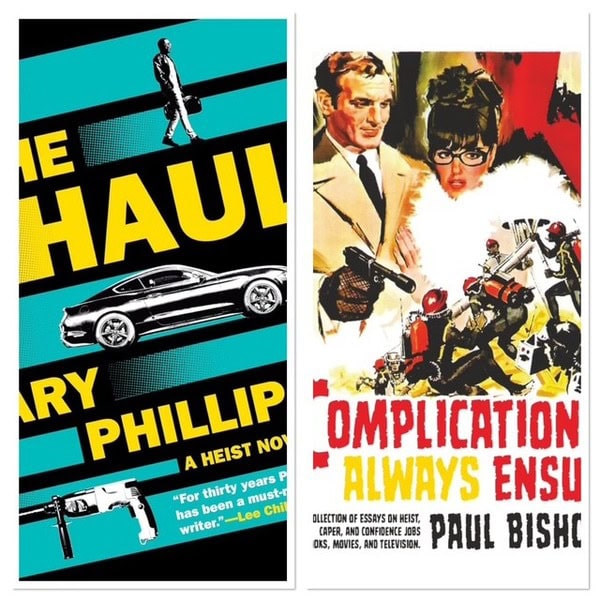
American Gary Phillips has also kept the sub-genre alive, particularly with his co-edited anthology Culprits (see below) and his latest book The Haul. Also arriving at nearly the same time as The Haul, is Paul Bishop’s magnificient celebration of heists, capers and confidence jobs, Complications Always Ensue (also below).
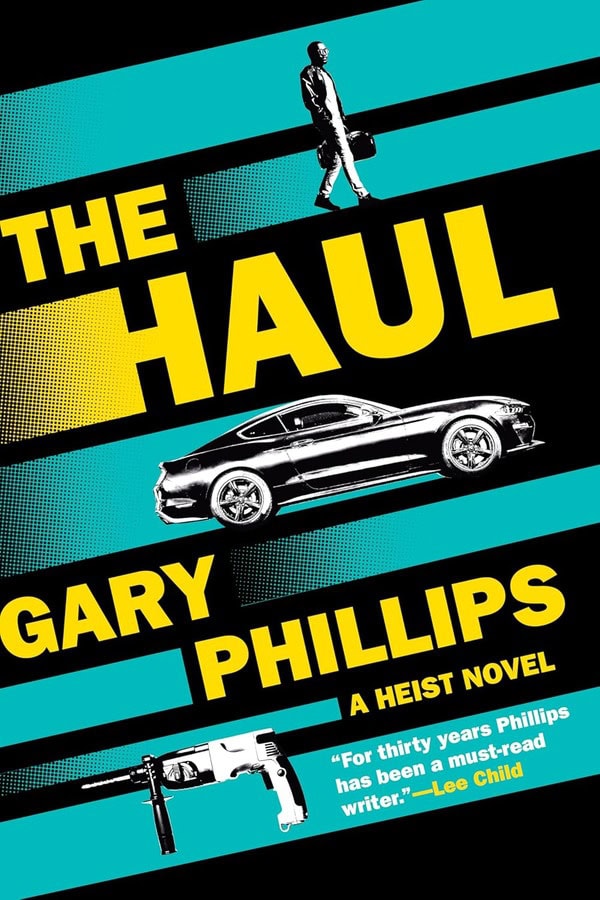
Gary Phillips’ The Haul, (Soho Crime, 14 July 2026), brings back professional thief O’Conner, who, in the great traditions of the heist novel, is tempted out of semi-retirement for one last job.
After years of close calls, O’Conner spends most of his time running his legitimate businesses and playing pickleball. Except for his longtime girlfriend, no one in his middle-class neighbourhood is the wiser to his double life. However, in typical genre fashion, O’Conner’s past refuses to stay dead. When he is approached by a former disgruntled employee of a tech billionaire with a proposal to heist millions of dollars, he cannot resist.
The billionaire has secreted away the cash, in case society crashes, in a secret bunker hidden beneath his newly constructed basketball arena. With the help of the billionaire’s former insider, O’Conner puts together a solid team of professionals to undertake the operation and sets about the planning. The promise of a big score, however, attracts unwanted attention and dangerous ghosts from O’Conner’s past that he thought were long buried. Of course, as is always the case, complications and violence soon ensue.
The Haul is an attention grabbing robbery novel that is given more substance with flashbacks to O’Conner’s coming-of-age as a young black orphan in the backstreets of Los Angeles. The story flows at a very good pace, with the planning of the robbery quickly sketched in and the actual theft itself unfolding with good tension. The main focus of the book is on the individuals caught up in the robbery, and Phillips neatly crafts a good array of characters, all with their quirks and treacherous ways. After several flashes of violence and a twist, or two, the story builds to the obligatory exciting, and violent, conclusion.
Phillips says that O’Conner is inspired by Richard Stark’s Parker, and there is a strong 1960s and 70s paperback feel to the story, but it has been brought up to date with the latest technology and an understandable sense of rage against the wealth of tech billionaires. There are also subtle racial themes woven into the story.
Overall, The Haul is highly entertaining. The story is greatly enhanced by some interesting side vignettes, and Phillip’s ability to do quick character studies, as well as a solid dose of violence. Fans of old and new heist stories will love this one. It also has a pretty cool cover.
The Haul is released in the United States on 14 July 2026 and is also available in Australia and the United Kingdom on the same day.
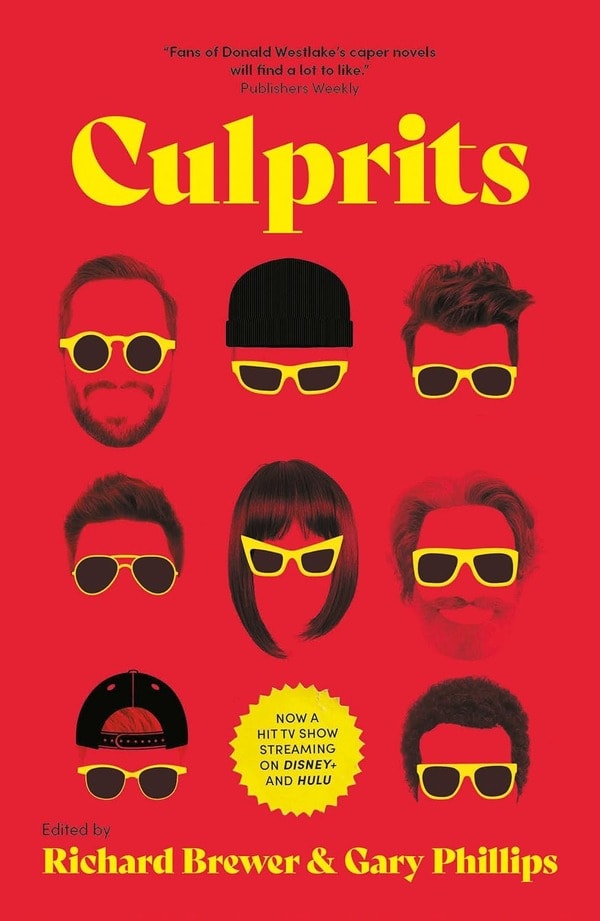
I also recently read Culprits, (Datura, 2018), which is a sort of pre-equel to The Haul.
Edited by Phillips and Richard Brewer, Culprits is a very clever anthology, which takes as its starting point a seven million dollar heist that goes spectacularly wrong. Apart from the opening chapter, the focus of the book is not on the robbery itself, but on the members of the professional crew that pull off the heist, and what happens to them afterwards.
Featuring linked stories by the editors and a collection of well respected authors, including Zoë Sharp, Brett Battles and Gar Anthony Haywood, the book traces the adventures of the surviving members of the O’Conner’s gang as they are pursued by the authorities and the angry owners of the stolen money.
All of the individual stories are great, and largely avoid a sense of repetition. The highlights are probably Zoë Sharp’s darkly twisting tale about the wife of the wealthy, crooked Texas rancher who is the target of the heist; David Corbett’s equally down beat account of the financier behind the robbery; and Manuel Ramos’ tough and violent story about a female member of the gang who finds herself holed up in a small Texas town.
Brewer and Phillips also provide good stories that detail the robbery and the immediate aftermath, and wrap the whole thing up. O’Conner features prominently in the opening and closing chapters as the mastermind behind the robbery, and it is very much his story.
In all, Culprits is very good collection that throws a slightly different light on the heist novel.
Incidentially, Culprits was apparently made into a streaming show on Disney, but I have not seen it.
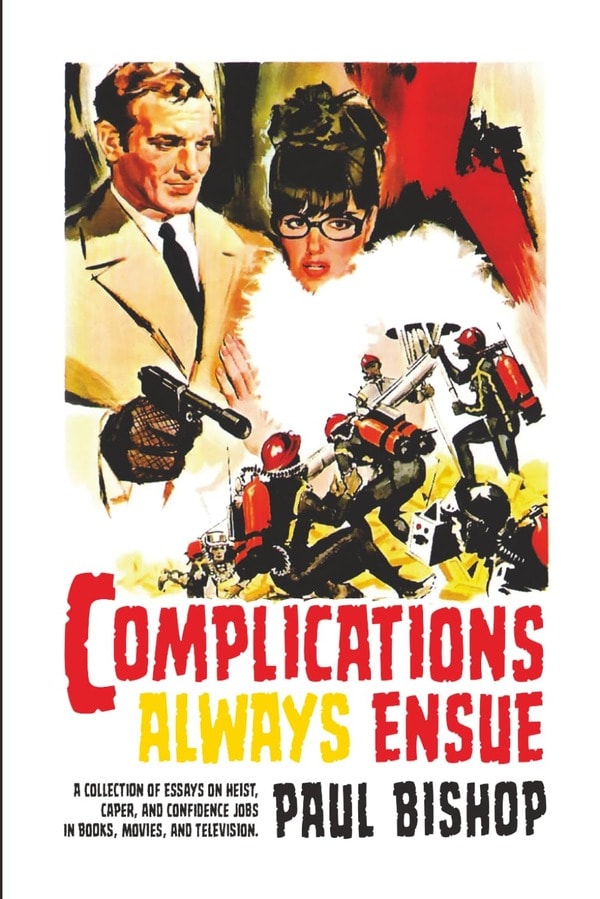
For fans of heist books and films, Paul Bishop’s Complications Always Ensue (Genius Books, 2026) is a must read.
From classic hardboiled heist stories to smart caper tales and even futuristic robberies, Bishop covers all aspects of the genre in style. More of a series of reflections than a compendium, the book dives into an impressive array of heist related stories. The numerous chapters range from broad essays on the rise of the caper film in the 1960s and the many faces of Richard Stark’s Parker character on film, to more detailed examinations of individual books and films, such as Michael Connelly’s Void Moon and the Clint Eastwood movie Kelly’s Heroes. There is also a short chapter on Garry Disher’s books about Australian thief Wyatt.
Understandably, Donald Westlake/Richard Stark features frequently throughout the book, but there are also good essays on other old-time practitioners in the field, such as Max Allan Collin’s Nolan series and the various heist books by Alan White.
All of the essays are well informed and thematically based, and Bishop offer good insights into how the books, films and television shows fit into a broader canvas.
I really enjoyed Complications Always Ensue. It is great fun dipping into the individual essays, and it will have you jotting down the titles of various books and films to read and watch. Personally I would have liked less on the films and more on the books, and was surprised that Wallace Stroby’s Crissa Stone books didn’t feature more, but this is a very small quibble and overall I loved it. It is probably the most enjoyable book on popular crime and thriller culture I have read since Mike Ripley’s excellent Kiss, Kiss, Bang, Bang.
Don’t miss this one.