
TRASHY TUESDAY: 1960s EXPLOITATION PAPERBACKS – NAZIS, POWS, PERVERSION AND WHITE COOLIES
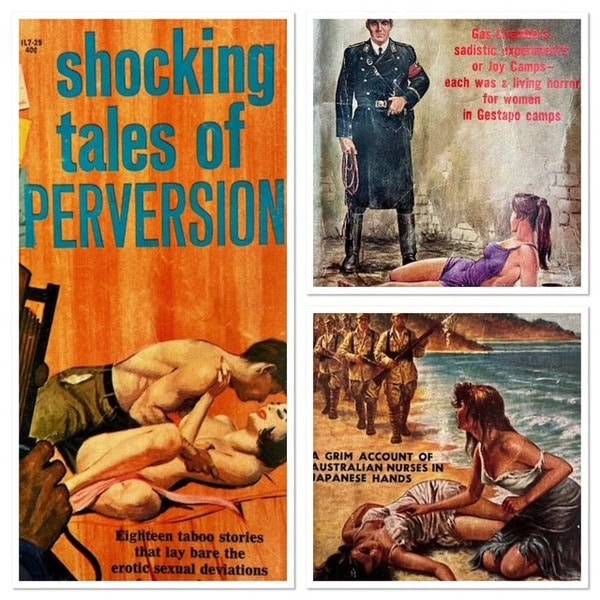
Paperback publishers, especially Horwitz in Australia, underpinned their usual output of crime, romance and westerns with less savoury books that sought to exploit serious issues with lurid covers and the promise of perverted sex.
The Second World War provided ample sources of such material for publishers, who responded with a steady stream of books that delved into war atrocities and the abuse of women, often nurses, by Nazis and Japanese prison guards. While claiming to expose the truth of these events – “as a grim reminder of what can happen when a civilised nation is dominated by ruthless brutality” – they are often packaged in a way that seems more salacious than educational. There is also more than a hint of racism about them.
Recent book finds have reminded me of how prevalent these books were in the 1960s. Looking at them now, they cast a disturbing light on reading habits in the 1960s and there is probably a wealth of material there for researchers to reflect on, especially the preoccupation with “erotic sexual deviations” in the last book.
NAZIS
Australian publisher Horwitz maintained a regular flow of novels and ‘true’ accounts about Nazi atrocities throughout the 1960s and 1970s. The covers on these books varied in explicitness but all seemed to have attractive young women with bare shoulders and in varying degree of undress. A Nazi officer standing to the side and contemplating the young woman also seems to be a requirement, as seen in these recent books that I have found.
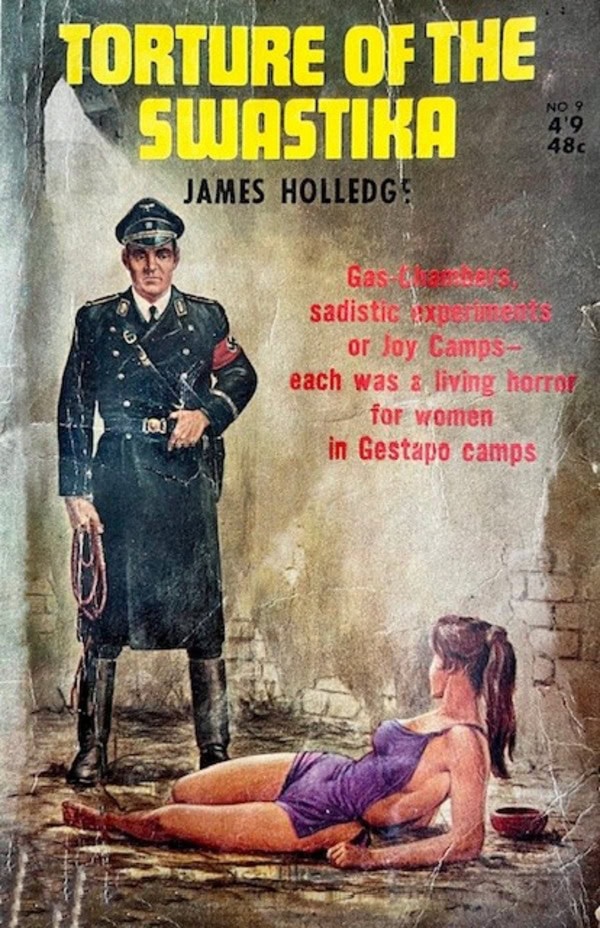
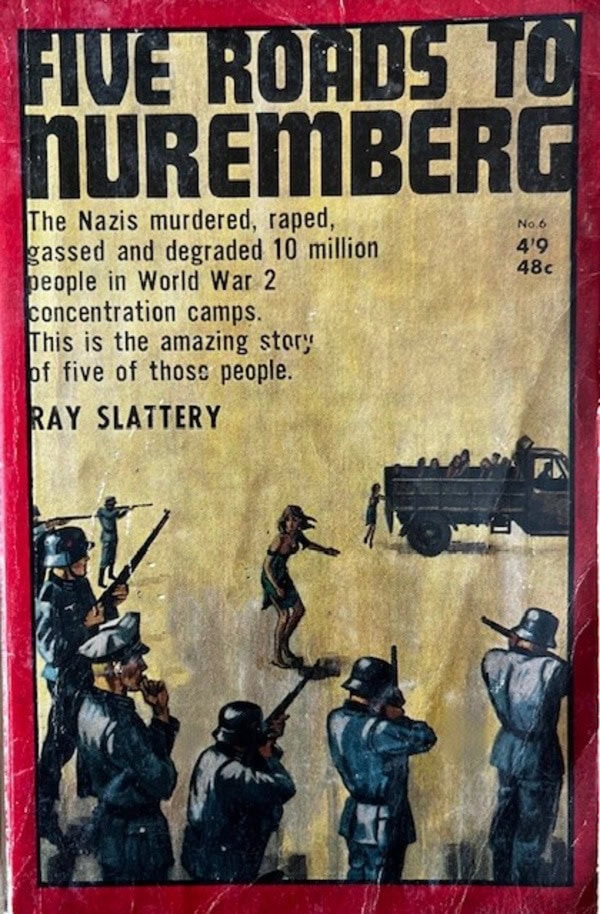
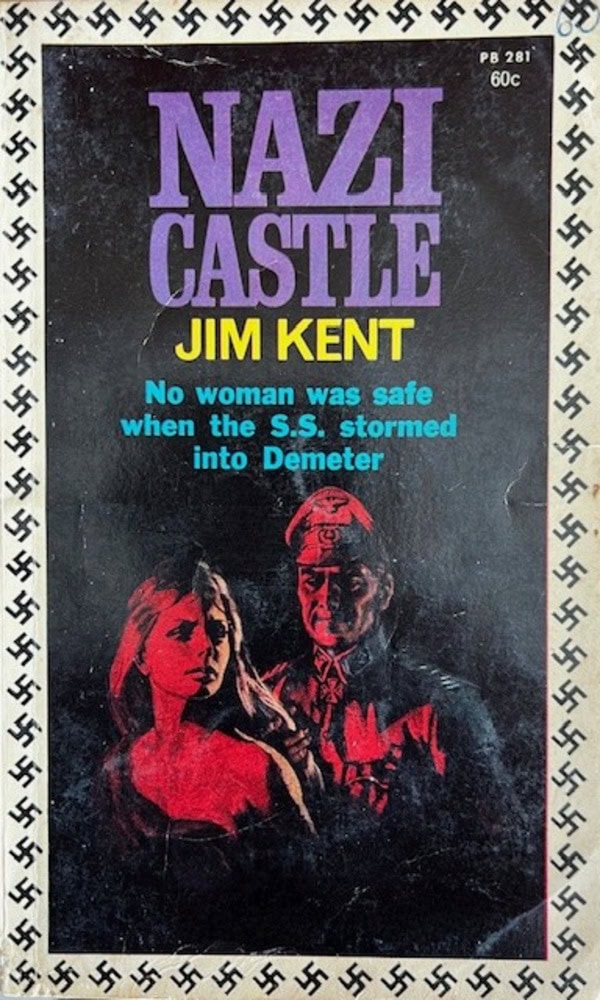
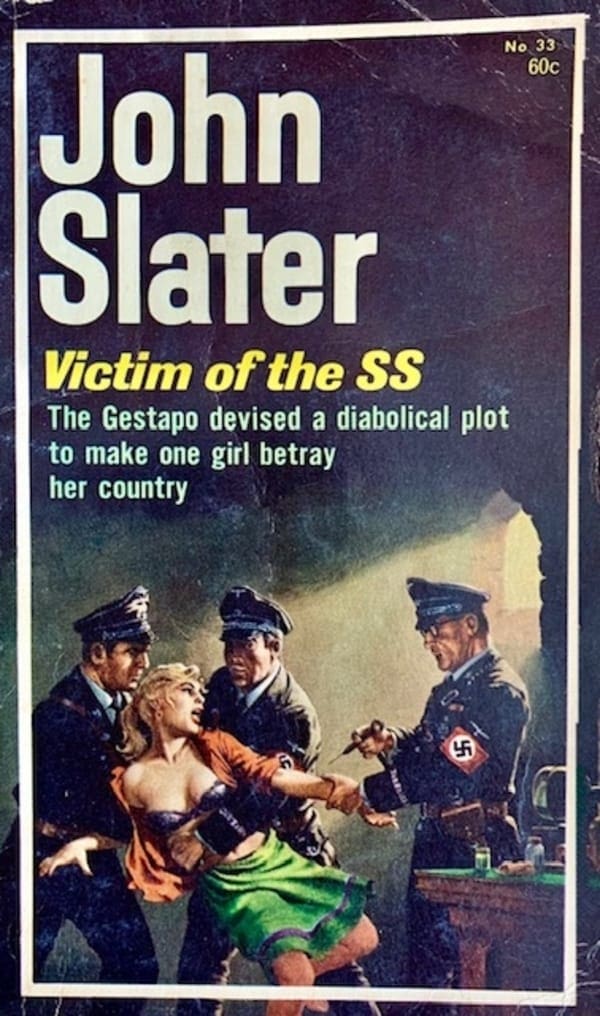
More examples of Horwitz novels about diabolical Nazis plots and medical experiments can be found here and elsewhere on my blog: https://murdermayhemandlongdogs.com/trashy-tuesday-australian-nazi-exploitation-pulp-swastika-castle-by-john-slater-horwitz-1966/; https://murdermayhemandlongdogs.com/trashy-tuesday-horwitz-book-haul-and-andrew-nettes-book-on-horwitz-publications/
PRISONERS OF THE JAPANESE
Horwitz also strongly promoted in the 1960s a sub-genre of men’s adventure books about Australian soldiers and nurses being held as prisoners of war and the tortures they experienced under the Japanese. These books usually focussed on the cruelty of the Japanese guards and fed off the strong resentment towards the Japanese that still existed in the 1960s (and probably longer). Often these books had a particularly perverse fascination with the degradation of “white women” by the Japanese (see below).
It was also a theme to found among British publishers such as Panther, Digit and NEL. My recent British finds include Betty Jeffrey’s first hand account of the terrible massacre of Australian nurses at Banka Island, but which also manages to feature scantily dressed nurses on the cover.
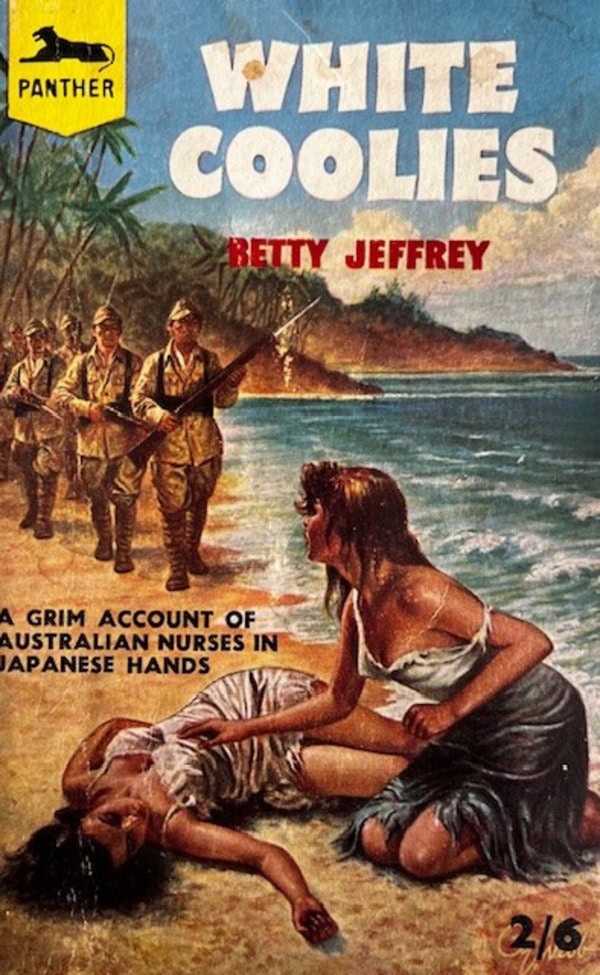
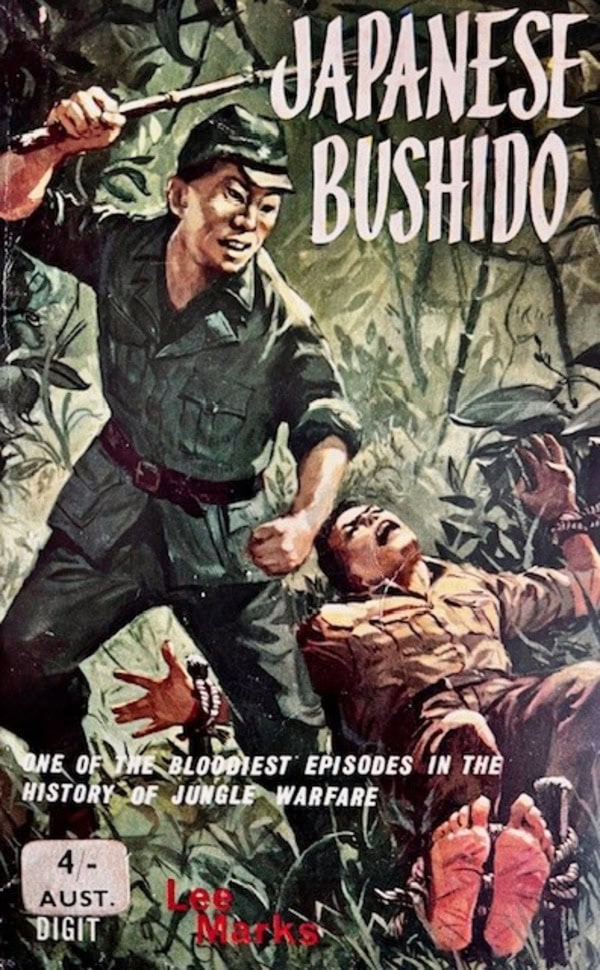

More examples of Horwitz novels about the treatment of Australian POWs and nurses can be found here and elsewhere on my blog: https://murdermayhemandlongdogs.com/trashy-tuesday-pows-and-the-war-against-the-japanese/
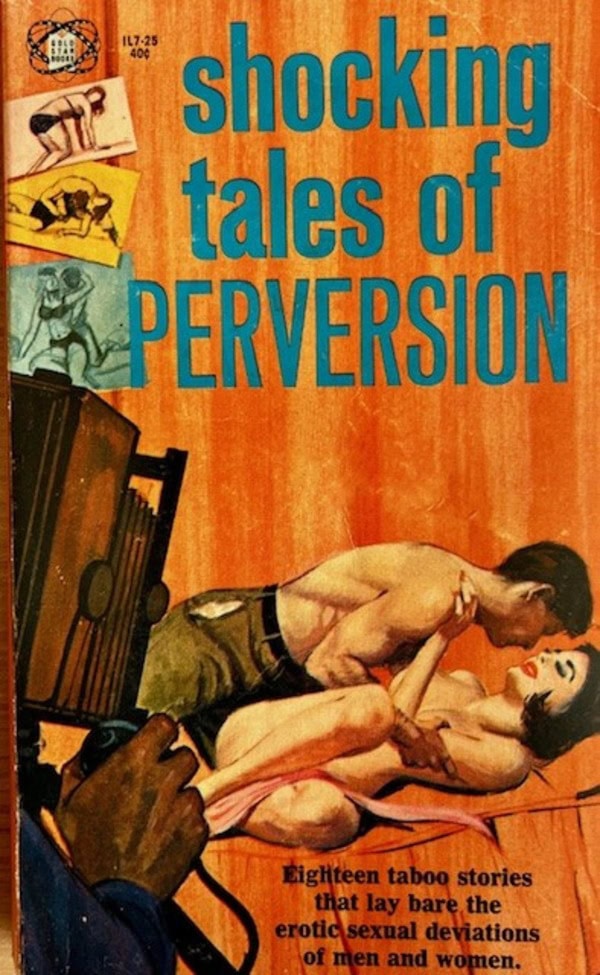
SEX
Sex sells, and publishers around the world were quick in the 1960s to exploit the selling power of sex with a range of ‘exposés’ about sexual practices and deviations. This is certainly the case in the below Gold Star book that provides “Eighteen taboo stories that lay bare the erotic sexual deviations of men and women” with the view to exploring “the dark recesses of human personality in the finest literary terms.”