
TRASHY TUESDAY: PLANTATION PULP BY ROBERT TRALINS
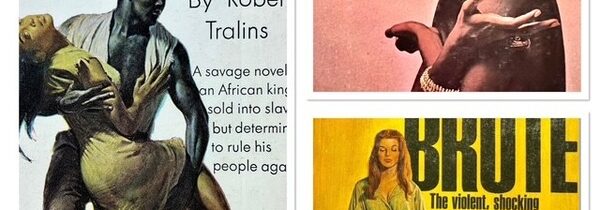
Plantation/slaver pulp was a popular, but unpleasant, sub-genre championed by many publishers in the 1970s. In the United Kingdom, New English Library (NEL) was a particularly enthusiastic promoter of plantation novels, or ‘slavesploitation’ as it is sometimes called, and between 1968 and 1981 published around 50 slaver novels.
Many of the British published plantation/slaver novels published by NEL were imported from the United States, particularly from publishers such as Lancer Books and Paperback Library.
Prolific author Robert Tralins was one of the main American contributors to the genre. Tralins started in the pulps and is believed to have written over 250 books under various names and across multiple popular genres. He would seem to have written seven plantation-styled books, which, like the rest of his genre output, featured lots of sex and violence. Not surprisingly, his books have been criticised for their predictable plotting and poor writing, and how they depict “black people in a dehumanizing and hypersexualized manner”. Nevertheless they proved very popular in America and the United Kingdom, and elsewhere.
Black Stud (1969), originally released as Black Brute in America (below), is probably his best known book, with the alternative titles giving a good sense of its attitudes and focus. His books are nowadays hard to find, although I recently came across a couple of copies.
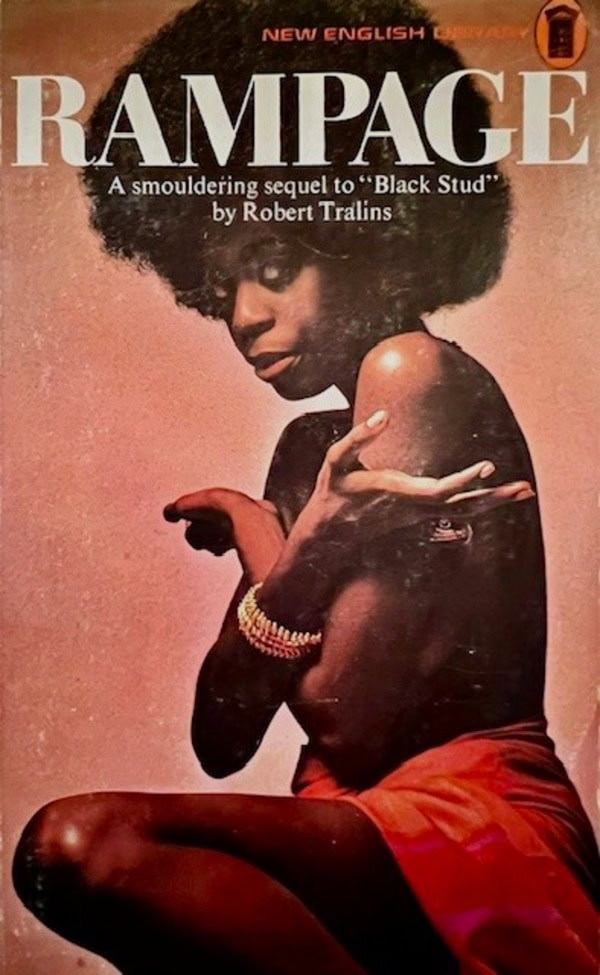
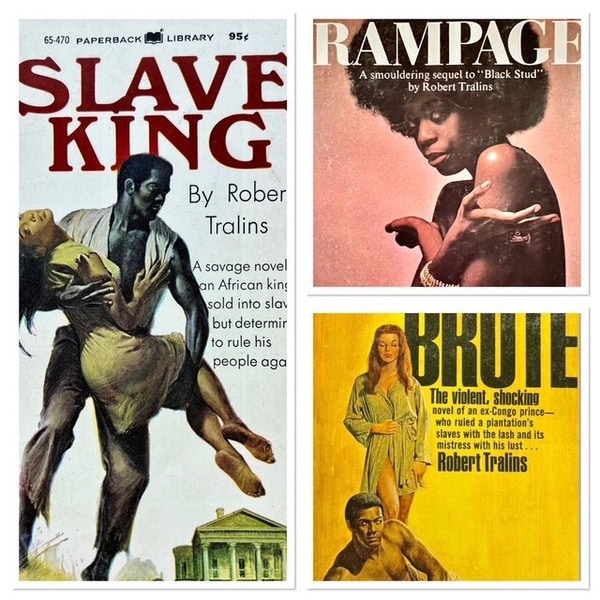
Rampage (original title Runaway Slave) was the sequel to Black Stud/Black Brute and again features the ‘ex-Congo prince’ Brutus, who is still on the run from his white owner, but managing to strike up various ‘intimate relations’ along his way. The book provides the usual quota of sex and violence, including several scenes that are probably too tasteless to be included in books these days.
The cover on the above New English Library edition (1973) uses one of the photos that they apparently purchased in bulk for cover illustrations from Lagarde. Only a handful seemed to have been used however, with NEL preferring the more provocative cover illustrations by Tony Masero and Richard Clifton-Dey (see the cover at the bottom of the article).
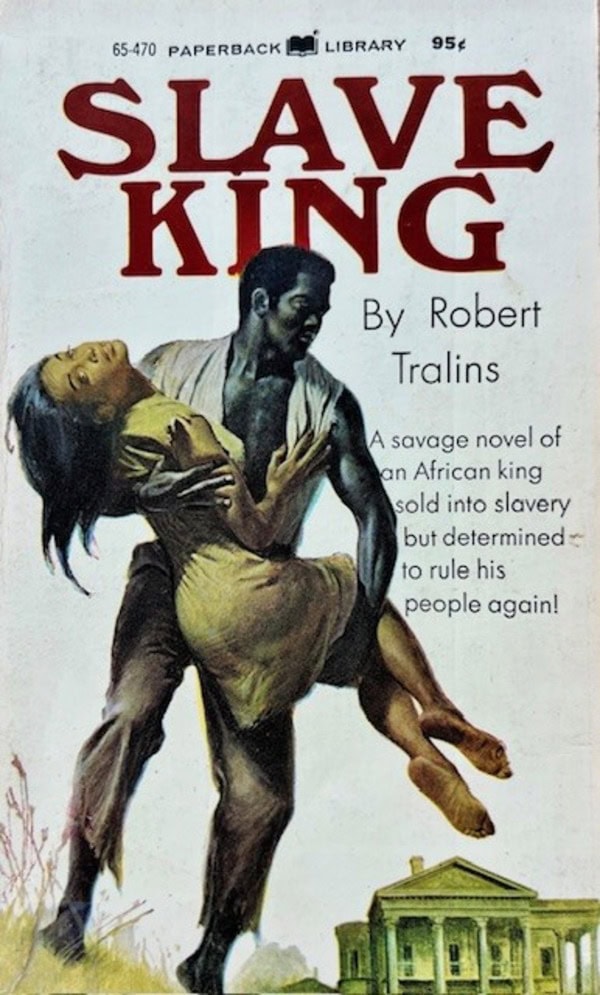
Tralins’ Slave King followed a similar path as his ‘Brutus’ books, this time with the enormous Mtu, king of the Ashanti. The American Paperback Library edition of Slave King (1970) features a more restrained cover than that usually given to them in the United Kingdom by NEL. It was released by NEL in 1970, but I have not seen a copy.
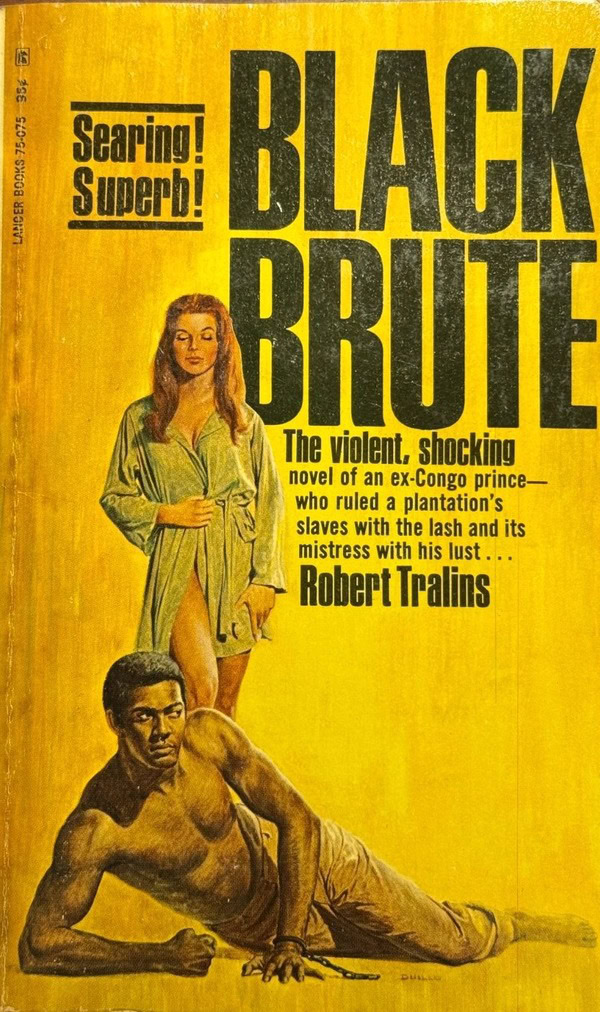
Black Brute was the first of Tralins’ plantation novels featuring the ex-Congo Prince, Brutus. The artwork on this original Lancer edition again promises inter-racial sex and violence.
Plantation pulp and slave exploitation books were a low point of men’s paperback literature, but it is interesting to reflect on the strategies that NEL and other publishers used to attract readers, and what that says about culture and society in the 1970s. I suspect that much of the appeal of the books came from the forbidden titillation of inter-racial sex and the frequent sadistic touches, that were somehow justified by the historical nature of the stories. It also gave the white writers and readers the opportunity to indulge in racial stereotypes and tropes under the cover of historical fiction. The genre largely came to a halt by the mid 80s, with more authentic and less exploitive stories about slavery emerging. At the same time exploitive publishers moved onto newer pastures, including bikers, graphic horror and tales about interracial sex involving native Americans, which even the Australian publisher Horwitz dived into with titles like White Squaw and Slave Of The Apaches.
For more information about plantation pulp from British publishers see my earlier article here: https://murdermayhemandlongdogs.com/trashy-tuesday-plantation-pulp/
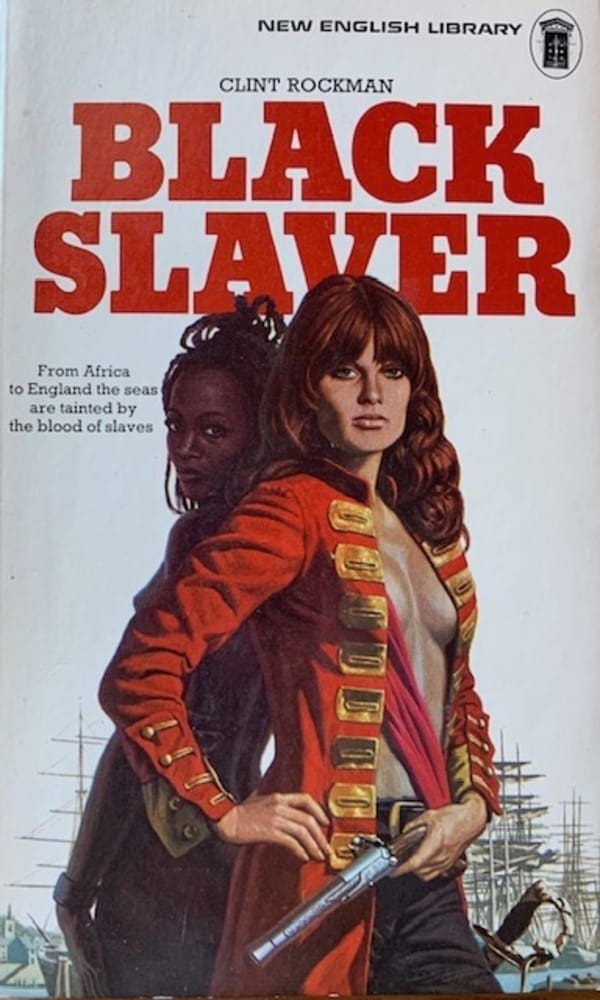
Black Slaver by Clint Rockman, art by Richard Clifton-Dey. See article above.