
TRASHY TUESDAY: “TRUE TALES OF COURAGE AND DARING” – 1960S AUSTRALIAN PAPERBACK MILITARY HISTORY FROM HORWITZ
Popular Australian paperback publisher Horwitz usually focussed their war story output on salacious tales of military endeavours, often involving the violation of pretty Australian nurses by Japanese soldiers or notorious Nazi sex camps. As well, they produced a lot of less sensational war stories, primarily penned by ‘Australia’s Greatest Novelist of the Sea’, J. E. Macdonnell. Mixed in with these were some supposedly true accounts of Australian military activities.
Journalist James Holledge was Horwitz’s chief writer of popular non-fiction books, and between 1965 and 1971 he wrote forty five books that spanned a diverse range of subjects from white slavery to black magic to Paris After Dark and even Flying Saucers Over Australia. Sex was a frequent theme, and even his history books tended to be salacious in a nature – Sex Broke The Roman Empire. Scattered between these, however, were some relatively mild accounts of Australian military involvement in World War I and II, with a focus on heroic actions. The books had the same casual approach to research and accuracy that the rest of his output did, but they were solid accounts.
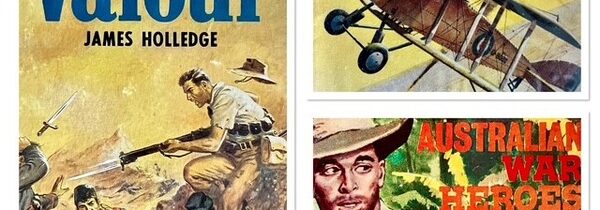
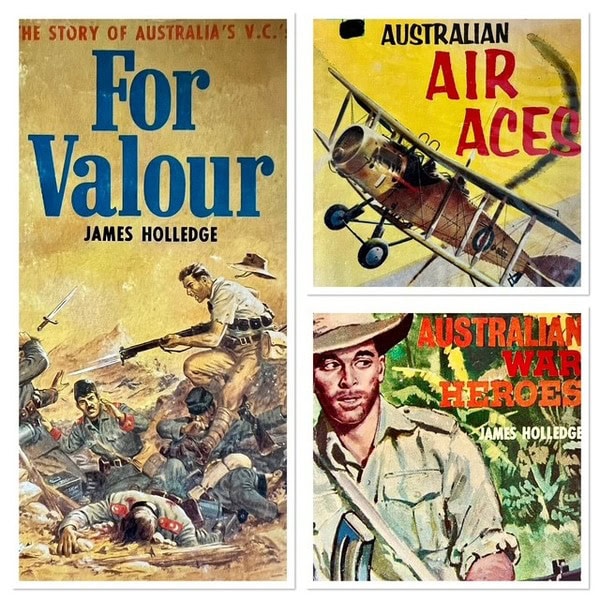
The war books were enhanced by some marvellous covers from Horwitz’s team of artists, especially For Valour (below), which has a typically great action-packed illustration by the legendary Col Cameron. The cover for Australian War Heroes (below) by Phil Belbin, is also quite evocative, with a stereotypical Australian Digger in jungle gear as its centrepiece.
I recently acquired three of his books, below, which focussed on war heroes, heroic deeds and V C winners.
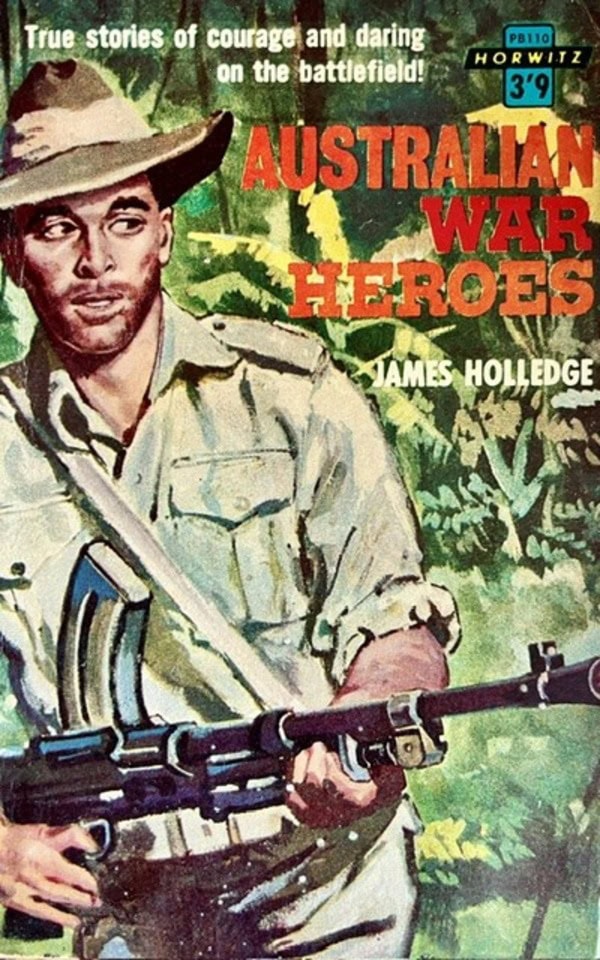
A good cover illustration by Phil Belbin, which really captures the popular image of an Australian soldier at war in the jungle of Papua New Guinea.
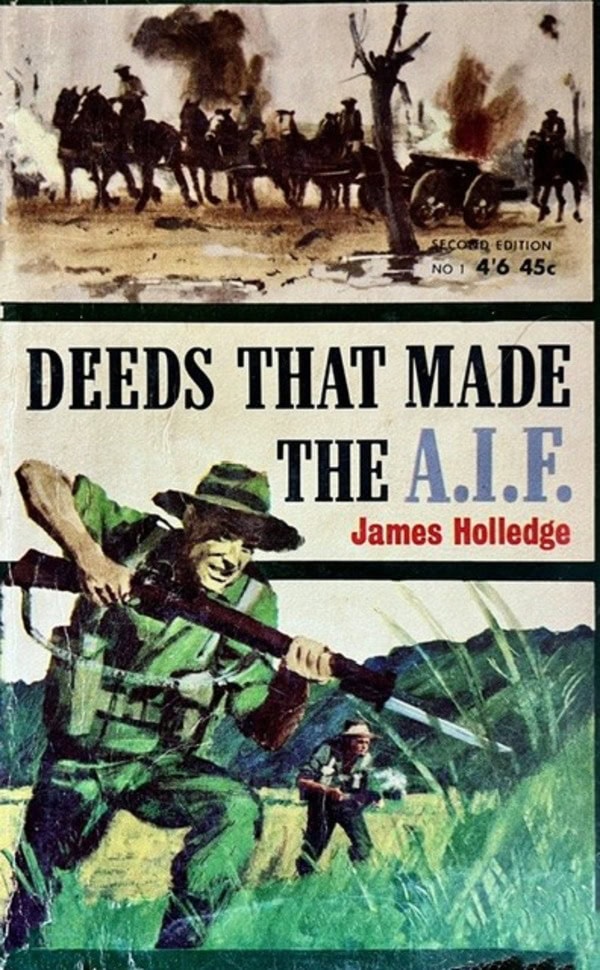
Another very evocative cover. Bayonets were a popular image on war books and novels. Cover artist unknown.
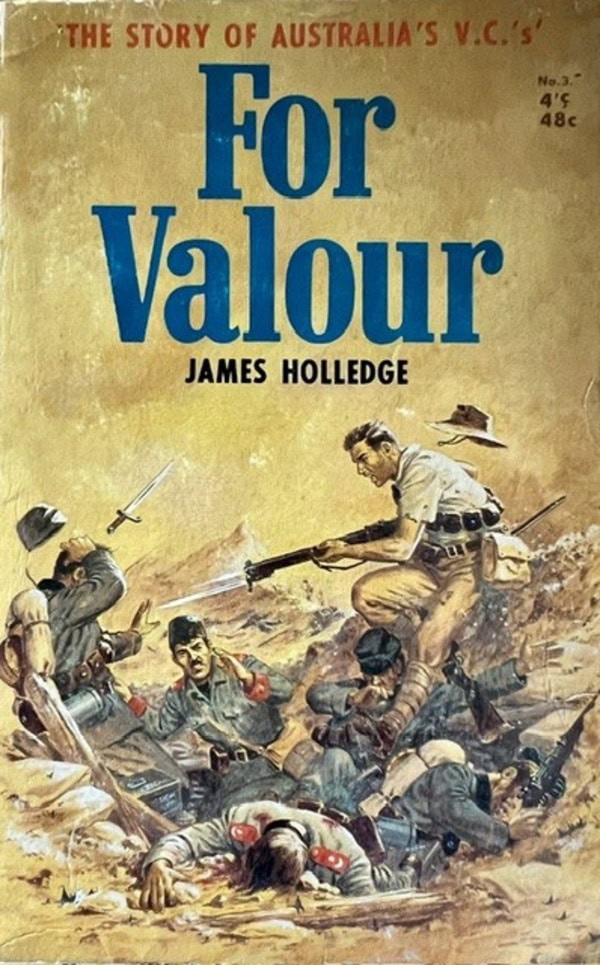
A great classic cover by Col Cameron, who excelled in producing military illustrations. This one certainly captures attention. Cameron did a lot of covers for the J. E. Macdonnell naval war novels, but most are not credited to him. The above cover showcases his ability to produce visually appealing, realistic illustrations that were rich in detail, especially when it came to weapons and uniforms.
See some more Col Cameron covers here: https://murdermayhemandlongdogs.com/trashy-tuesday-august-book-haul/
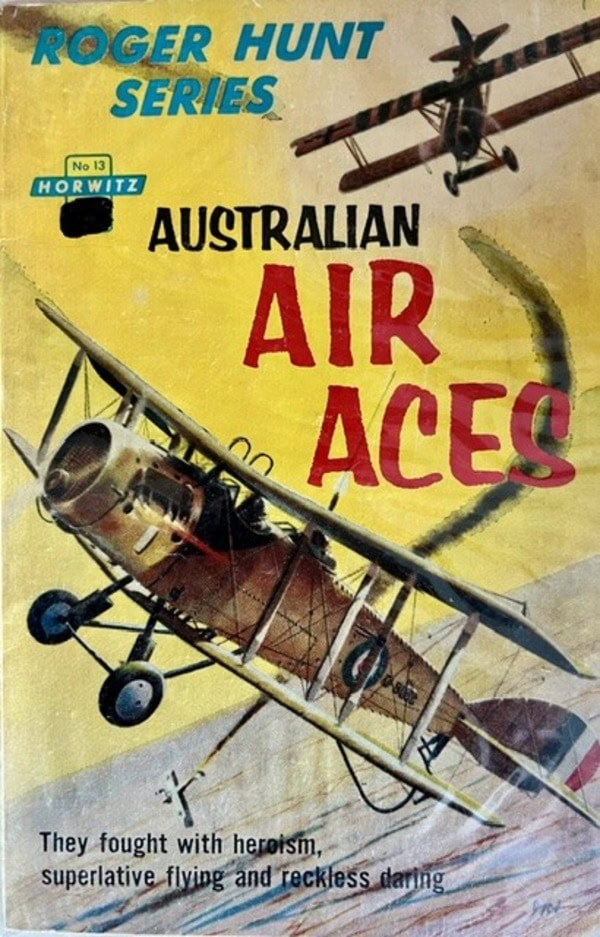
Heroic deeds was also the theme of Australian Air Aces, which appeared as part of the Roger Hunt military series. The Roger Hunt books, written variously by L. W. Riley, Richard Wilkes-Hunter, Ray Slattery and Mervyn Andrews, tended to be novels, rather than factual accounts. Australian Air Aces, written by Mervyn Andrews, was probably the only exception. It gave a brief history of the growth of the Australian Flying Corps and their service in World War I, and highlighted a selection of air aces. Very light in tone, it was an easy flowing account. The below copy, number 13 in Horwitz’s Commando/War series, features a nice cover by John Dixon, who did around 16 war covers for Horwitz.
Another good example of Dixon’s work is here: https://murdermayhemandlongdogs.com/trashy-tuesday-aussie-pulp-paperback-book-haul/
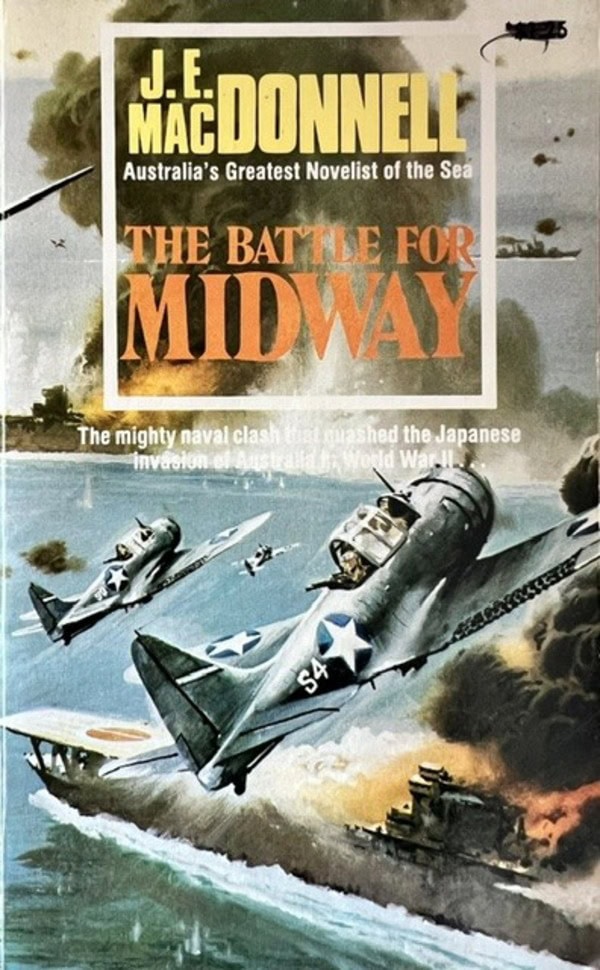
J. E. Macdonnell is best known for his naval war novels, having written 147 books in his Sea Adventure Series alone, but late in his career he also turned to non-fiction with The Battle For Midway. Written in his usual vivid style, it offers a brisk, atmospheric account of the major naval battle and includes several black-and-white photographs.
Horwitz’s non-fiction war output did not reach any great heights in terms of research or analysis, but it did help to satisfy the public’s appetite for simple tales of military heroism, especially stories from World War II, which was still very much alive in popular culture in the 1960s.
If you are interested, here is a link to one of the articles on Horwitz’s fictional war output: https://murdermayhemandlongdogs.com/trashy-tuesday-pows-and-the-war-against-the-japanese/